ISTP - The Maker
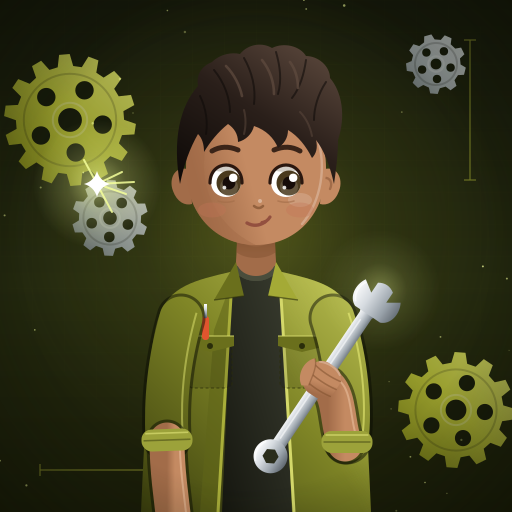
Bold and practical experimenters, masters of all kinds of tools.
"Don't tell me, show me."
Overview
ISTPs are observant artisans with an understanding of mechanics and an interest in troubleshooting. They approach their environments with a flexible logic, looking for practical solutions to the problems at hand.
An ISTP thinks like a mechanic of reality: an internal model of how things work runs in your head, and you are not satisfied until the parts fit it exactly. That is your Introverted Thinking (Ti) - it does not accept ready-made explanations, it wants to take things apart, test and understand for itself. So you can look quiet and indifferent while actually reading the situation better than anyone who is talking.
Extraverted Sensing (Se) connects that model to the world. You learn through your hands: an engine, code, a tool, a body in motion. In emergencies, when everyone panics, you become calm and sharp - you see what needs doing now and do it. Tertiary Introverted Intuition (Ni) adds the occasional gut sense of where a situation is heading, one you trust more than you admit.
Extraverted Feeling (Fe) is your inferior function. Social expectations, etiquette, talks about feelings and group drama feel like a foreign language, sometimes a burden. Yet underneath is genuine sensitivity to people that just does not find words. Maturity for an ISTP means discovering that connection is not a distraction from what matters, and that a simple "I care" is sometimes worth more than a perfect fix.
Strengths
- Calm in a crisis
When something breaks, you do not panic, you focus. Your sharpness rises exactly when others lose theirs.
- Hands-on problem solving
You find the real fault instead of guessing, and fix it with whatever tools are at hand. Theory interests you only if it works in practice.
- Fast skill learning
Hand you a new tool, sport or system and you will soon handle it better than people who read the whole manual.
- Independent thinking
Authority, trends or "everyone does it this way" do not convince you. You check for yourself, which protects you from a lot of nonsense.
- Efficiency without noise
You do not need a deck or a meeting to do good work. You find the shortest path from state A to state B.
- Loyalty through action
You do not make many declarations, but when someone close needs help you show up with tools and do not ask too many questions.
Growth Areas
- Disappearing when it gets emotional
When a conversation turns emotional you tend to go silent, leave or joke. Even one sentence that acknowledges the other person's feeling changes everything.
- Trouble with long-term commitment
Distant plans feel like a cage. Separate real freedom from avoidance, and commit at least to the things that truly matter to you.
- Silence read as indifference
Silence is natural to you, but others fill it with interpretations. Saying "I am thinking about it" saves a lot of misunderstanding.
- Unnecessary risks
The need for stimulation and challenge sometimes pushes you into physical or financial risk. Ask beforehand "what does it cost if this fails?".
- Dry criticism
You point out the flaw precisely and briefly, forgetting there is a person in front of you. Adding "this is almost there" before the fix makes the difference.
- Dismissing social rules
Etiquette and procedures sometimes look pointless to you, but they hold trust between people together. Understand what they are for before going around them.
Cognitive Functions
How They Think
ISTPs lead with Introverted Thinking (Ti), creating a logical framework for how things work. Extroverted Sensing (Se) gathers real-time physical data to test this logic. Ni provides occasional gut feelings, while Inferior Fe means they can be awkward with emotional expression and may accidentally offend others while being "honest".
Going Deeper
Famous Examples
People commonly typed as ISTP. None of them took the test here, so treat it as an educated guess, not a diagnosis.
Ideal Career Paths
Work with tangible results and wide autonomy: engineering, mechanics, coding, emergency medicine, flying, security, field research. You flourish when handed a real problem and left alone with the tools, in a place that values skill over politics.
Long meetings, pointless reports, bureaucratic procedures, emotionally managing a team and office politics. A role that is all long-range planning with no contact with the ground, or repetitive work with no technical challenge, switches you off fast.
In Relationships
In a relationship you first need freedom: room for your hobbies, time alone and trust that does not demand constant reports. You show love through action - solving problems, fixing things, being there when needed - and enjoy shared experiences, adventure and spontaneity more than fixed romantic rituals.
The common friction: your partner is waiting for words, and you are sure your actions speak for themselves. Remember that even someone who understands your actions sometimes wants to hear the sentence itself. Just as important - when something bothers you, do not wait until it blows up. A short, matter-of-fact talk in time beats weeks of silence.
Tips for Daily Life
Texting "I'm fine" when you're not - isn't fine
Commit to one thing that scares you emotionally per month
People aren't machines - they need maintenance conversations too
Matches
Based on the ISTP function stack: where understanding comes most naturally, and where it takes the most work. Any type can thrive with any type - this is a map, not a verdict.
Most natural matches





Close Neighbors
Each differs from ISTP by a single letter - worth a look if this page didn't feel spot-on