
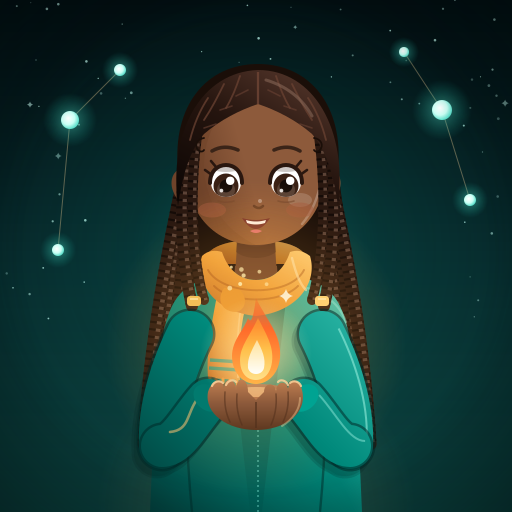
ENFJ - The Hero
Charismatic and inspiring leaders, able to mesmerize their listeners.
"People don't care how much you know until they know how much you care."
Overview
ENFJs are idealist organizers, driven to implement their vision of what is best for humanity. They often act as catalysts for human growth because of their ability to see potential in other people and their charisma in persuading others to their ideas.
An ENFJ walks into a room and within a minute knows who feels left out, who is quietly angry and who needs a kind word. That is your dominant Extraverted Feeling (Fe): you read a room the way others read a sign, and feel an almost physical responsibility for everyone being okay. People are drawn to you because around you they feel genuinely seen.
But an ENFJ is not just "a nice person". Introverted Intuition (Ni) gives your warmth a direction: you see in each person who they could become, and in each group what it could turn into. That is why you gravitate toward leading, teaching and mentoring - not to control, but because watching potential go to waste and doing nothing is almost unbearable for you.
Your least developed side is Introverted Thinking (Ti), your inferior function. Cold analysis, logical self-doubt and "what do I think about this, regardless of how others will feel" all take real effort. Maturity for an ENFJ means learning that it is fine to think alone, fine to disappoint someone in order to stay true to the facts, and impossible to carry everyone's feelings by yourself.
Strengths
- Reading people accurately
You pick up moods, tensions and small cues long before anyone says a word, and know how to respond to exactly what is needed.
- Leadership that inspires
You can put a vision into words so that people feel it belongs to them. Groups come together around you almost without being asked.
- Believing in others
You see abilities in people they have not yet noticed in themselves, and you tell them so out loud. Many remember a talk with you as a turning point.
- Mediating and building harmony
In a conflict you understand both sides and find the words that let each person climb down without losing face.
- Persuasive communication
You speak to feelings and values, not only to facts, so a message that comes through you sounds credible and moving.
- Commitment to your people
When someone close needs help, you show up - with a meal, a call at the right moment and a plan for getting out of it.
Growth Areas
- Pleasing instead of honesty
The wish to keep the peace sometimes makes you agree when you do not. Gentle honesty protects relationships better than fake agreement.
- Owning other people's feelings
You feel guilty when someone near you is not okay, even when it has nothing to do with you. Other people's feelings are theirs, and fixing them all is not your job.
- Help nobody asked for
Seeing "who they could be" can turn into pressure. Ask before steering someone onto the path you think is right for them.
- Sensitivity to criticism
Criticism of what you did feels like criticism of who you are. Separate the two: you can get the work wrong and still be a good person.
- Neglecting your own needs
You know exactly what everyone needs and much less what you need. ENFJ burnout usually follows months of giving without refilling.
- Deciding by the group's mood
When a decision hinges on what will make everyone feel good, it can be the wrong one. Check the dry logic too before you commit.
Cognitive Functions
How They Think
ENFJs lead with Extroverted Feeling (Fe), prioritizing the emotional needs and harmony of the group above all. Introverted Intuition (Ni) helps them see the long-term potential in people. Se allows them to engage with the moment, while Inferior Ti represents a struggle to detach from people and analyze things with cold, impersonal logic.
Going Deeper
Famous Examples
People commonly typed as ENFJ. None of them took the test here, so treat it as an educated guess, not a diagnosis.
Ideal Career Paths
Roles built around people and growth: teaching, education, HR, coaching, team leadership, politics and social organisations. You flourish when the work has clear meaning, when you have room to influence, and when feedback shows your effort makes a difference to someone.
Solitary work with screens and data and no human contact, a cynical or cruel culture, management that ignores people, and conflicts nobody will address. A role where you are everyone's shoulder to cry on without real authority also wears you down fast.
In Relationships
In a relationship you invest your whole heart: you remember dates, plan surprises and notice the smallest shift in mood. You look for a deep bond with shared growth, and long talks about life, family and the future are the fuel of love for you. A shallow or distant connection does not last with you.
The common friction: you see where your partner could grow and start pushing - and they feel like a project. Learn to love the person in front of you as they are right now. One more thing - your needs are exactly as legitimate as theirs. A relationship where only you give does not stay balanced, however perfect it looks from outside.
Tips for Daily Life
You can't pour from an empty cup - rest is not selfish
Not every silence is a sign that something is wrong
Let people struggle a little; that's how they grow
Matches
Based on the ENFJ function stack: where understanding comes most naturally, and where it takes the most work. Any type can thrive with any type - this is a map, not a verdict.
Most natural matches






Close Neighbors
Each differs from ENFJ by a single letter - worth a look if this page didn't feel spot-on